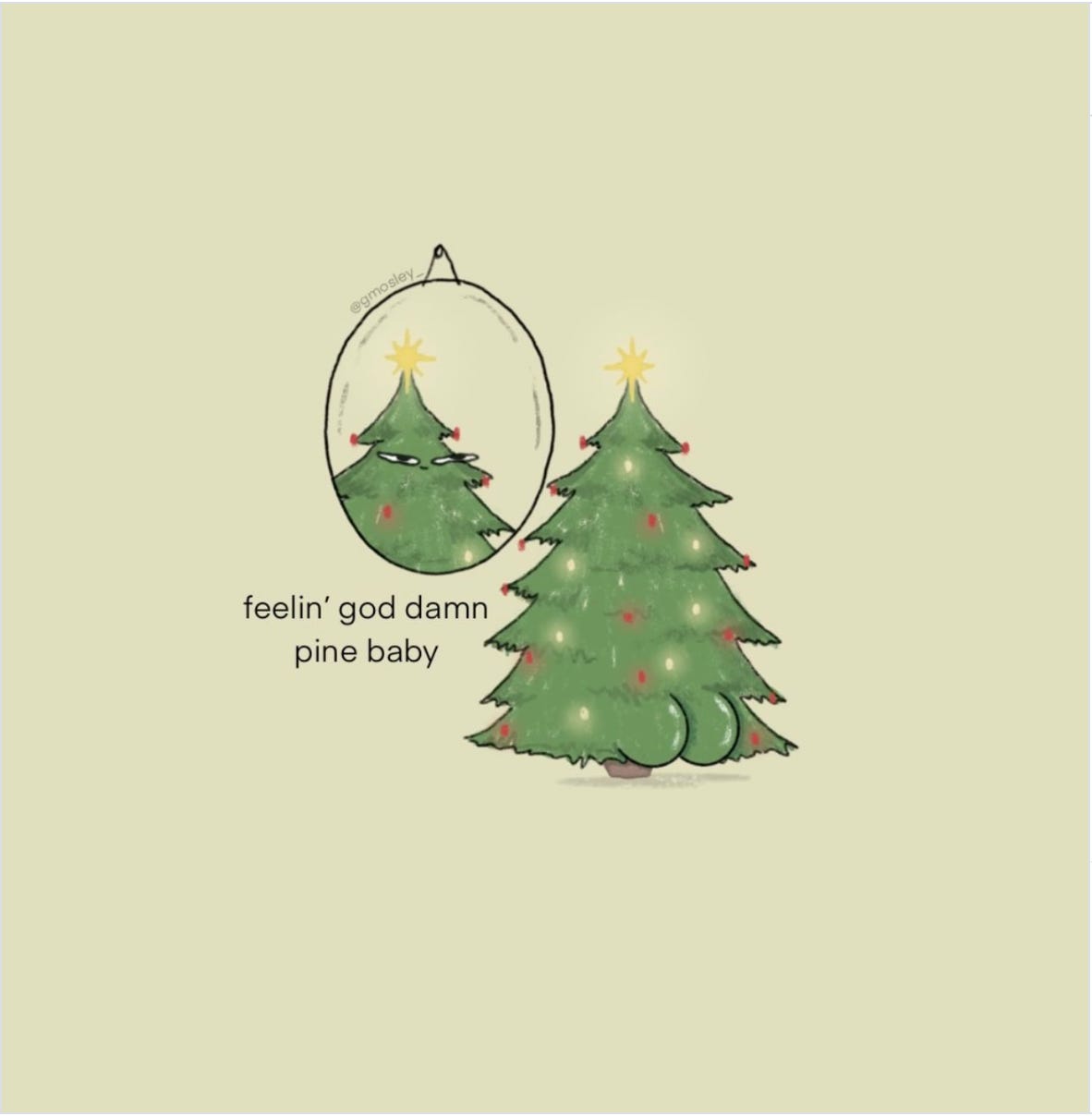
The Christmas Tree Effect
How businesses decorate themselves into dysfunction


Every organisation begins life with noble intentions.
A simple process. A clear reporting line. A decision path you can actually explain without needing a laminated flowchart and a quiet cry.
Then something goes wrong.
A project misses a deadline. A customer complains. Finance gets surprised. Security has a wobble. Someone senior asks, with the subtle menace of a Victorian headmaster, “How do we make sure this never happens again?”
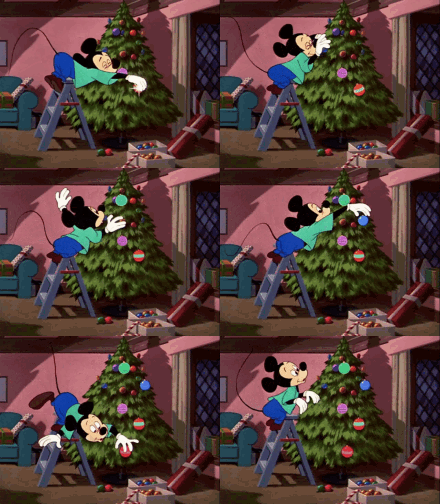
And so the first bauble is hung. An extra approval step. Then another. A governance checkpoint. A mandatory weekly report. A steering committee. A pre-steering committee to prepare for the steering committee.
Soon your once-practical operating model resembles a department store Christmas tree assembled by people with access to unlimited tinsel and unresolved anxiety.
This is the Christmas Tree Effect: the steady accumulation of controls, exceptions, processes, and managerial ornaments until the original structure vanishes.
Business leaders are especially vulnerable because each addition feels rational in isolation. No executive wakes up aiming for bureaucracy. Each layer arrives wearing the respectable clothes of risk management, oversight, alignment, or best practice.
Yet collectively, these additions create a different beast.
Speed slows. Decisions drift upwards. Teams stop thinking and start complying. Innovation suffocates beneath ceremonial paperwork.
Nobody removes anything because every absurd process was once somebody’s serious solution. Large organisations are full of these ghost decisions.
You see it everywhere.
The product team needing seven sign-offs to change button text. The hiring process that takes fourteen interviews to recruit a middle manager. The transformation programme whose governance requires more effort than the transformation itself.
At some point, the tree exists only to support the decorations.
The tragedy is that complexity often masquerades as professionalism. Leaders mistake visible control for actual control. A thick process manual feels reassuring in the same way a medieval suit of armour feels reassuring—until you need to move quickly.
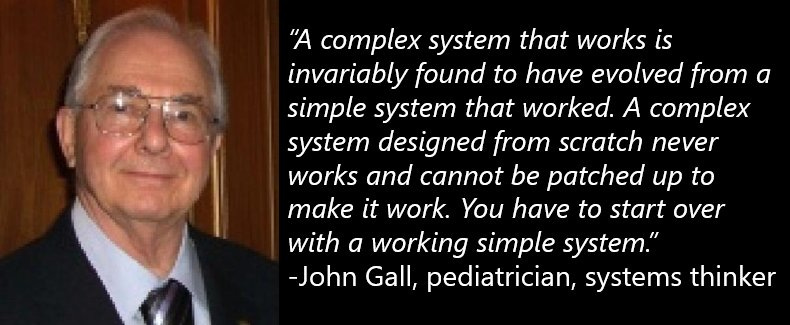
Gall’s Law offers a brutal correction: a complex system that works is invariably found to have evolved from a simple system that worked.
It did not come from a committee workshop in Slough.
Real leadership is an act of demolition. It is disciplined subtraction.
What can be removed?
Which decisions can move closer to the work?
Which rituals survive purely through habit?
The healthiest organisations are not the ones with the most controls.
They are the ones where you can still see the tree.